
ENDO belly and funky poops. How nutrition can help.
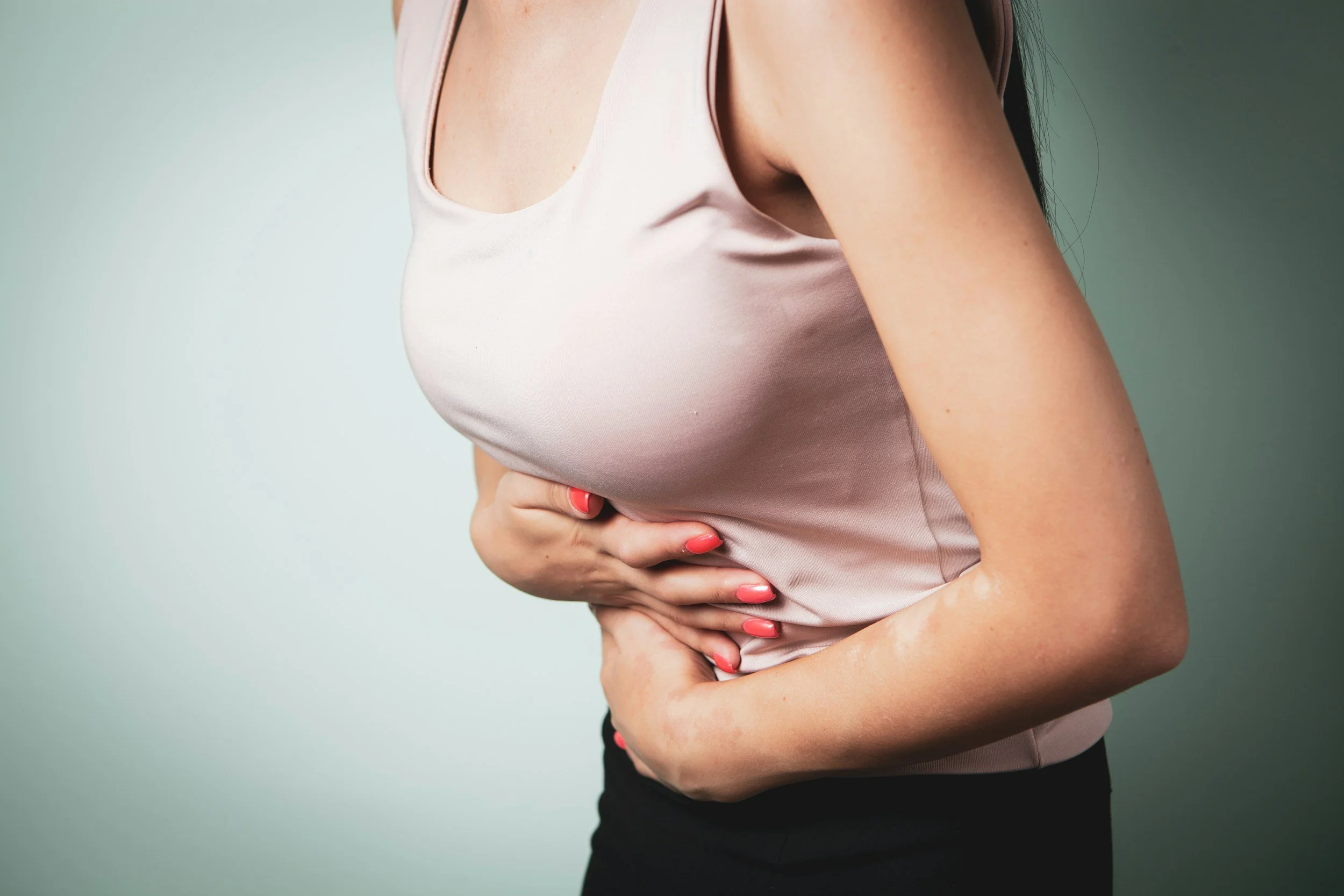
If you live with Endometriosis, you’re likely no stranger to the "Endo Belly" - that uncomfortable, often painful bloating that can make you feel six months pregnant by 4:00 PM. But alongside the bloat, many women experience what I like to call "funky poops"- the frustrating cycle of urgency, constipation, or stools that just feel off depending on where you are in your cycle.
Because Endometriosis is an inflammatory condition that can affect the pelvic floor and even the bowel wall itself, managing your digestive rhythm is just as important as managing pelvic pain. Here is how we can use nutrition and habit stacking to find some consistency.
Establish a Meal Rhythm
Our digestive system thrives on predictability. Your gut has its own internal clock (the migrating motor complex), which acts as a "cleansing wave" to move food through the tract.
The Strategy: Aim for consistent meal timings. When we graze all day, we never give the gut a chance to finish its "clean-up" phase. Try to leave 3–4 hours between meals to allow that natural rhythm to take place. This prevents the stagnation that often leads to fermentation and gas. Regular eating can also help to reduce IBS type symptoms.
Lower the "Fermentation Load" (Without the Stress of Full FODMAP)
While a full Low FODMAP diet can be helpful for some, it is incredibly restrictive and often unnecessary for long-term Endo management. Instead, I find many women benefit from simply lowering the "high fermentation" triggers.
Gluten and Lactose: You don't necessarily need to be GF unless you have Coeliac disease, but lowering your load of gluten intake can reduce the overall intake of fructan, a known high fermentation FODMAP.
The Swap: Try sourdough over standard wheat bread, or swap cow’s milk for a nut milk or LF option. These small shifts lower the amount of fermentation and gas production happening in your bowel
Soften Stools with Soluble Fibre
If you experience constipation, this can add to you endo pain by increase pressure in the pelvic region. Different fibres to different things and in this case we want to focus on soluble fibre.
Why it works: Soluble fibre absorbs water and turns into a gel-like consistency, making stools softer and easier to pass without straining.
Top Picks: Chia seeds (soaked), oats, peeled zucchini, PHGG and carrots. Think "soft and soothing" rather than "rough and crunchy."
Strategic Coffee Timing
Coffee is a well-known stimulant of the gastrocolic reflex, the signal that tells your colon to empty when food hits your stomach. However, for those with Endo-related urgency or loose stools, a coffee on an empty stomach can be a recipe for disaster.
The Strategy: Move your coffee to after you’ve had a protein-rich breakfast. This buffers the acidity and prevents an over-exaggerated "emergency" trip to the bathroom. If you struggle with constipation, that morning coffee can be a tool, but timing it with a meal ensures it works with your digestion rather than over-stimulating it.
The Goal: Gentle Consistency
Bowel changes with Endometriosis are often a reflection of what's happening with inflammation and pelvic tension. By focusing on rhythm and stool consistency, we take the "stress" out of the bathroom experience, which in turn helps to calm the nervous system and reduce overall pain.
Not sure if you have endo or not? Read about some of the menstrual cycle red flags here
Barnard ND, Holtz DN, Schmidt N, Kolipaka S, Hata E, Sutton M, Znayenko-Miller T, Hazen ND, Cobb C, Kahleova H. Nutrition in the prevention and treatment of endometriosis: A review. Front Nutr. 2023 Feb 17;10:1089891. doi: 10.3389/fnut.2023.1089891. PMID: 36875844; PMCID: PMC9983692.
Martire FG, Costantini E, d'Abate C, Capria G, Piccione E, Andreoli A. Endometriosis and Nutrition: Therapeutic Perspectives. J Clin Med. 2025 Jun 5;14(11):3987. doi: 10.3390/jcm14113987. PMID: 40507748; PMCID: PMC12156139.
Moore, J. S., Gibson, P. R., Perry, R. E., & Burgell, R. E. (2017). Endometriosis in patients with irritable bowel syndrome: Specific symptomatic and demographic profile, and response to the low FODMAP diet. Australian & New Zealand Journal of Obstetrics & Gynaecology, 57(2), 201–205. https://doi.org/10.1111/ajo.12594
Nirgianakis, K., Egger, K., Kalaitzopoulos, D. R., Lanz, S., Bally, L., & Mueller, M. D. (2022). Effectiveness of dietary interventions in the treatment of endometriosis: A systematic review. Reproductive Sciences, 29(1), 26–42. https://doi.org/10.1007/s43032-020-00418-w
Varney, J. E., So, D., Gibson, P. R., Rhys-Jones, D., Lee, Y. S. J., Fisher, J., Moore, J. S., Ratner, R., Morrison, M., Burgell, R. E., & Muir, J. G. (2025). Clinical trial: Effect of a 28-day low FODMAP diet on gastrointestinal symptoms associated with endometriosis (EndoFOD) — A randomised, controlled crossover feeding study. Alimentary Pharmacology & Therapeutics, 61(12), 1889–1903. https://doi.org/10.1111/apt.70161